Tegallalang rice terraces near Ubud in Bali, framed by palm trees

Indonesia · Bali

Bali Travel Guide for Families & Couples

How Bali's main areas differ, when to go, what to do and how to get around — so you can choose the right base for your holiday.

Image: “Tegallalang Rice Terraces Bali” by Philip Nalangan, CC BY 4.0, via Wikimedia Commons. Resized and converted to WebP. Illustrative image, not taken by Asian Travel Tips.

Last updated: October 29, 2026
ATT
Written by Asian Travel Tips

Bali in Brief

  • Families

    Nusa Dua and Sanur are the usual choices for easy beach days; Ubud adds culture and nature.

  • Couples

    Ubud for wellness and scenery; Uluwatu for clifftop sunsets; Seminyak for dining.

  • Weather

    Broadly a drier season mid-year and a wetter season around the turn of the year.

  • Tourist levy

    International tourists pay a one-off Bali levy of IDR 150,000 per person.

  • Arrival

    Most visitors fly into I Gusti Ngurah Rai International Airport in the south.

  • Entry rules

    These depend on your passport — use our Visa Checker.

Introducing Bali

Bali is an Indonesian island and province with a predominantly Hindu culture that sets it apart from much of the rest of the country. Temples, daily offerings and ceremonies are part of everyday life, and visitors will see them in villages and towns as well as at well-known sites.

The island combines volcanic uplands, terraced rice fields and river valleys inland with very different coastlines in the south — from resort beaches to clifftop coves. That variety is the main reason the choice of base matters so much.

For families, the appeal is usually a mix of pools, beaches and gentle cultural outings. For couples, it tends to be scenery, spa and wellness stays, and good food. The trade-offs are traffic, which can make short distances slow, and the need to plan transport rather than rely on walking.

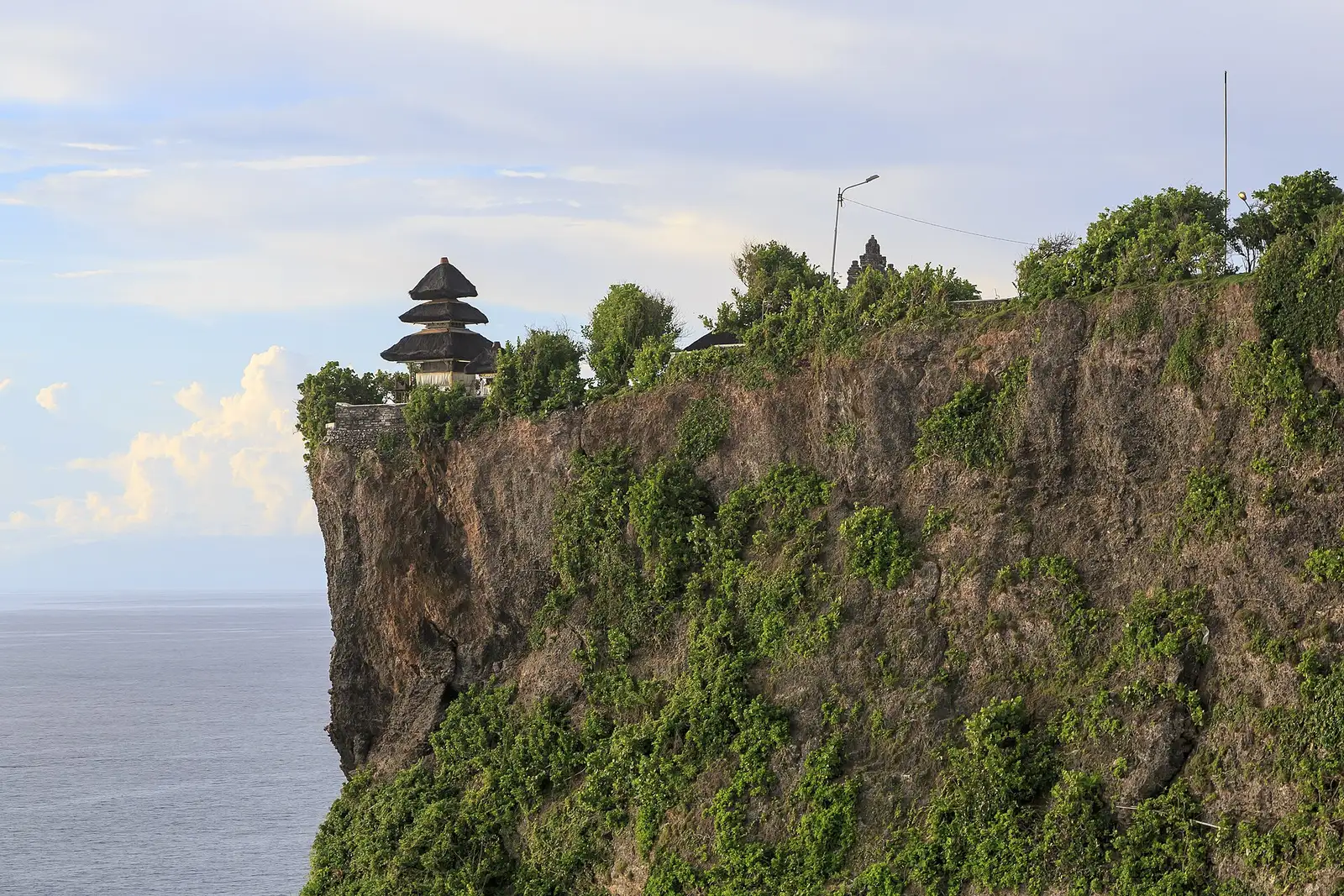
Pura Luhur Uluwatu temple shrine on top of a sheer limestone cliff above the sea in southern Bali
Pura Luhur Uluwatu on the Bukit Peninsula. Image: “Pura Luhur Uluwatu” by CEphoto, Uwe Aranas, CC BY-SA 3.0, via Wikimedia Commons. Resized and converted to WebP. Illustrative image, not taken by Asian Travel Tips.

Where to Stay in Bali

No single area suits every traveller. The summaries below are editorial assessments based on research; use them to narrow your shortlist, then check individual hotels.

Ubud

Inland, green and culture-focused, surrounded by rice fields, river valleys and villages.

Families
Good for curious children who enjoy nature and culture; fewer swim-from-the-beach options.
Couples
Popular for spa, wellness and slower, scenic stays.
Beach access
None — Ubud is inland. Pools replace the beach.
Attractions
Sacred Monkey Forest Sanctuary, rice terraces, temples, art villages, dance performances.
Restaurants
Wide choice in and around town, from warungs to restaurants.
Getting around
Central streets are walkable in places; resorts outside town need transport. Traffic can be slow.
Advantages
Culture, landscape, variety of day trips.
Disadvantages
No beach; some resorts sit a drive away from the centre.

Nusa Dua

A planned, gated resort enclave in the south with landscaped grounds.

Families
Strong — large beachfront resorts, pools and generally calm, orderly surroundings.
Couples
Relaxed and comfortable, though less independent village life on the doorstep.
Beach access
Beachfront resorts along the Nusa Dua coast.
Attractions
Mostly resort-based; day trips needed for culture and landscapes.
Restaurants
Largely resort restaurants plus a nearby shopping centre.
Getting around
Relatively close to the airport in the south; most excursions involve a drive.
Advantages
Ease, beach access, resort facilities.
Disadvantages
Can feel separate from everyday Balinese life.

Sanur

An established east-coast town with a long beachfront path.

Families
Often suggested for families wanting a quieter town with a beach.
Couples
Suits couples who prefer an unhurried pace.
Beach access
East-facing beachfront with a seafront path.
Attractions
Seafront walks; departure point for boats to nearby islands.
Restaurants
Restaurants and cafés along and behind the beachfront.
Getting around
In the south-east; reasonable access to the airport and to Ubud by road.
Advantages
Town atmosphere with a beach.
Disadvantages
Quieter evenings than Seminyak, if that matters to you.

Seminyak

Busy, fashionable west-coast area with shops, beach clubs and restaurants.

Families
Possible, but busier roads and a nightlife scene suit older children better.
Couples
Popular with couples who like dining, shopping and sunsets.
Beach access
West-facing beach; sea conditions can be rough — follow local flags.
Attractions
Dining, boutiques, sunset beach venues.
Restaurants
One of Bali's broadest restaurant scenes.
Getting around
Congested at peak times; short distances can take a while.
Advantages
Choice of food and shopping.
Disadvantages
Traffic and crowds.

Uluwatu

Clifftop Bukit Peninsula in the far south, with dramatic coastal scenery.

Families
Better for older children; many beaches involve steps or steep paths.
Couples
Strong for clifftop views, sunsets and secluded resorts.
Beach access
Cove beaches below cliffs, often reached by stairs; surf conditions vary.
Attractions
Pura Luhur Uluwatu clifftop temple and Kecak dance performances.
Restaurants
Spread out; many venues need a short drive.
Getting around
Spread-out area — you will rely on drivers or taxis.
Advantages
Scenery and sunsets.
Disadvantages
Beach access less straightforward with small children.

Ubud vs Nusa Dua

These two areas show Bali's contrasts most clearly. Ubud is about exploration: temples, rice terraces, the Sacred Monkey Forest Sanctuary, craft villages and evening dance performances, with jungle and river-valley resorts around the town.

Nusa Dua is about ease: beachfront resorts, large pools and landscaped grounds in a planned resort area. It suits days that revolve around the hotel, the beach and the kids' club.

Why some travellers combine them

On a longer holiday, a few nights inland followed by a beach stay can give you both sides of Bali without long daily drives. It is not necessary, though — a single base with day trips works well for many families, especially with younger children.

Practical considerations

  • Travel time: the distance is modest, but traffic means the transfer can be slow. Ask your hotel or driver for a realistic estimate for your travel day.
  • Traffic: avoid scheduling the move alongside a flight or a fixed-time activity.
  • Younger children: one hotel change is usually manageable; several can be tiring. Plan the drive around naps and meals.
  • Hotel changes: each move costs part of a day in check-out, transfer and check-in.
  • Transport: a pre-booked private driver is the simplest option with luggage and children.
  • Holiday length: combining two bases makes most sense on trips of around ten days or more.

Comparing resorts in Ubud and Nusa Dua?

Our independent comparison looks at three Marriott properties side by side — locations, pools, children's facilities and room types, based on official hotel information.

Read the Westin Ubud vs Westin Nusa Dua vs The Laguna comparison

Best Time to Visit Bali

Bali is warm all year, with high humidity. Rather than four seasons, it has a drier season and a wetter season. Based on long-term climate patterns, the drier months typically run from around April to October and the wetter months from around November to March. The exact start and end of each season varies by area and from year to year.

This describes typical historical patterns, not a forecast. Bali's climatology station (part of Indonesia's meteorological agency, BMKG) publishes seasonal outlooks for each year — check the latest one, and a short-range forecast, closer to your trip.

  • Drier season: generally more settled weather for excursions and beach days, and the busiest period for visitors.
  • Wetter season: heavier showers and storms, often interspersed with sunshine; greener landscapes.

Regional differences: the uplands around Ubud are higher than the southern coast and usually feel a little cooler, particularly in the evenings, and can see more rain.

UK school holidays: the summer holidays fall in Bali's drier season, which is also its busiest — book flights and hotels early. Christmas and Easter fall nearer the wetter months.

These are typical patterns, not forecasts. Weather in any given week cannot be guaranteed; check a current forecast closer to departure.

See our Asia weather guide for comparisons with other destinations.

Things to Do in Bali with Children or as a Couple

Suitability depends on your children's ages and interests. Opening hours, ticketing and age rules change — check the official website before you go.

Sacred Monkey Forest Sanctuary, Ubud

Suits: Families with children old enough to follow rules; couples

A forest sanctuary with temples and a large population of long-tailed macaques. The monkeys are wild and can grab bags, food and loose items, so follow the sanctuary's guidance and keep small children close.

Official website (opens in a new tab)

Rice terraces (including Tegallalang)

Suits: All ages; best early in the day

Tegallalang, north of Ubud, is one of the best-known terraced landscapes. Paths can be steep and uneven, which matters with toddlers or pushchairs.

Balinese temples

Suits: All ages, with appropriate dress

Clifftop Pura Luhur Uluwatu and many village temples welcome respectful visitors. Expect to cover your legs with a sarong and sash; some temples provide them.

Cultural performances

Suits: Older children and couples

Traditional dance is performed in Ubud and at Uluwatu, where the Kecak dance is staged at the temple. Evening timings may be late for younger children.

Taman Safari Bali

Suits: Families

A wildlife park in Gianyar regency, formerly known as Bali Safari & Marine Park (the old web address now redirects to Taman Safari). Check the official site for current shows, age guidance and ticket types.

Official website (opens in a new tab)

Waterbom Bali

Suits: Families with school-age children

A water park in Kuta. Many slides have height restrictions, so check them against your children before buying tickets.

Official website (opens in a new tab)

Beaches

Suits: Depends on the beach

Conditions vary greatly around the coast. Swim at patrolled beaches where possible and follow lifeguard flags and local advice.

A long-tailed macaque sitting on a wooden railing at the Sacred Monkey Forest Sanctuary in Ubud
A long-tailed macaque at the Ubud Monkey Forest. Image: “Macaca fascicularis, Ubud Monkey Forest, Bali” by Jakub Hałun, CC BY-SA 4.0, via Wikimedia Commons. Resized and converted to WebP. Illustrative image, not taken by Asian Travel Tips.

Practical Bali Travel Information

Arriving

Bali's main gateway is I Gusti Ngurah Rai International Airport (DPS), often called Denpasar airport, in the south of the island. Many hotels arrange transfers; otherwise, pre-book a driver or use the official taxi services at the airport.

Getting around

  • Private drivers hired by the day are a common way to sightsee, and practical with children.
  • Taxis and ride-hailing apps are available in the busier southern areas; some locations restrict app pick-ups.
  • Child seats should not be assumed. Request them in writing when booking a transfer or driver and confirm before travel, or bring your own.
  • Scooters are widely used, but riding requires a valid licence and insurance cover; many travel insurance policies exclude it without the correct licence.

Bali tourist levy

According to the Bali Provincial Government's Love Bali system, international tourists pay a levy of IDR 150,000 per person, once per trip to Bali. This is a provincial levy — it is separate from, and not a substitute for, Indonesia's visa and entry requirements.

  • Payment: cashless only. Love Bali strongly encourages paying online before departure; payment counters at Bali's airport and ports, and registered hotels, travel agents and attractions, can also take it.
  • Voucher: after payment, a levy voucher with a QR code is sent to the email address you entered.
  • Exemptions: holders of diplomatic and official visas, transport crew, KITAS/KITAP holders, family-unification and student visa holders, golden-visa holders and holders of certain other visas. Love Bali states that golden-visa and “other visa” holders must apply for exemption through the system.

Only use the official Love Bali website or app.

Love Bali — official tourist levy website (opens in a new tab)

Visas and entry requirements

Indonesia's entry rules depend on your nationality and can change. Rather than repeat them here, our Visa Checker shows what we have verified for your passport, with links to official sources.

Check Indonesia entry requirements for your passport

Customs and temple etiquette

The provincial government asks visitors to respect local customs, dress modestly — especially at temples and ceremonies — and not to enter the main areas of sacred sites unless they are praying or properly dressed. Avoid stepping on offerings placed on pavements, and give way to processions. Our guide to Asian customs and etiquette covers wider regional etiquette.

Responsible tourism

Refill water bottles where your hotel offers it, avoid attractions that offer close contact with wild animals and, as the provincial guidelines recommend, use licensed money changers.

Health, safety and insurance

Check vaccination and health advice with your GP or a travel clinic, and read TravelHealthPro's Indonesia page and the UK government's travel advice for Indonesia. Make sure your travel insurance covers medical treatment and repatriation and any activities you plan, such as water sports or riding a scooter.

Suggested Bali Itineraries

These are planning frameworks rather than fixed schedules. Leave rest days, particularly with children, and allow for traffic.

7 days — one base

Choose a single base: Nusa Dua or Sanur for beach-led days, or Ubud for culture. Plan two or three day trips with a driver and keep the remaining days for the pool and beach. One base avoids losing time to transfers.

10 days — Ubud then Nusa Dua

Three or four nights in Ubud for temples, rice terraces and the Monkey Forest, then six or seven nights in Nusa Dua to relax. Finishing in the south keeps you closer to the airport for departure.

14 days — two bases at an easier pace

Four or five nights in Ubud, then the rest by the coast — Nusa Dua for resort facilities, Sanur for a town feel, or Uluwatu for clifftop scenery (better with older children). Extra time allows a rest day after each move.

Benefits of changing hotels

Two very different experiences; shorter day trips from each base.

Disadvantages

Packing, a transfer day and settling in again — harder with young children.

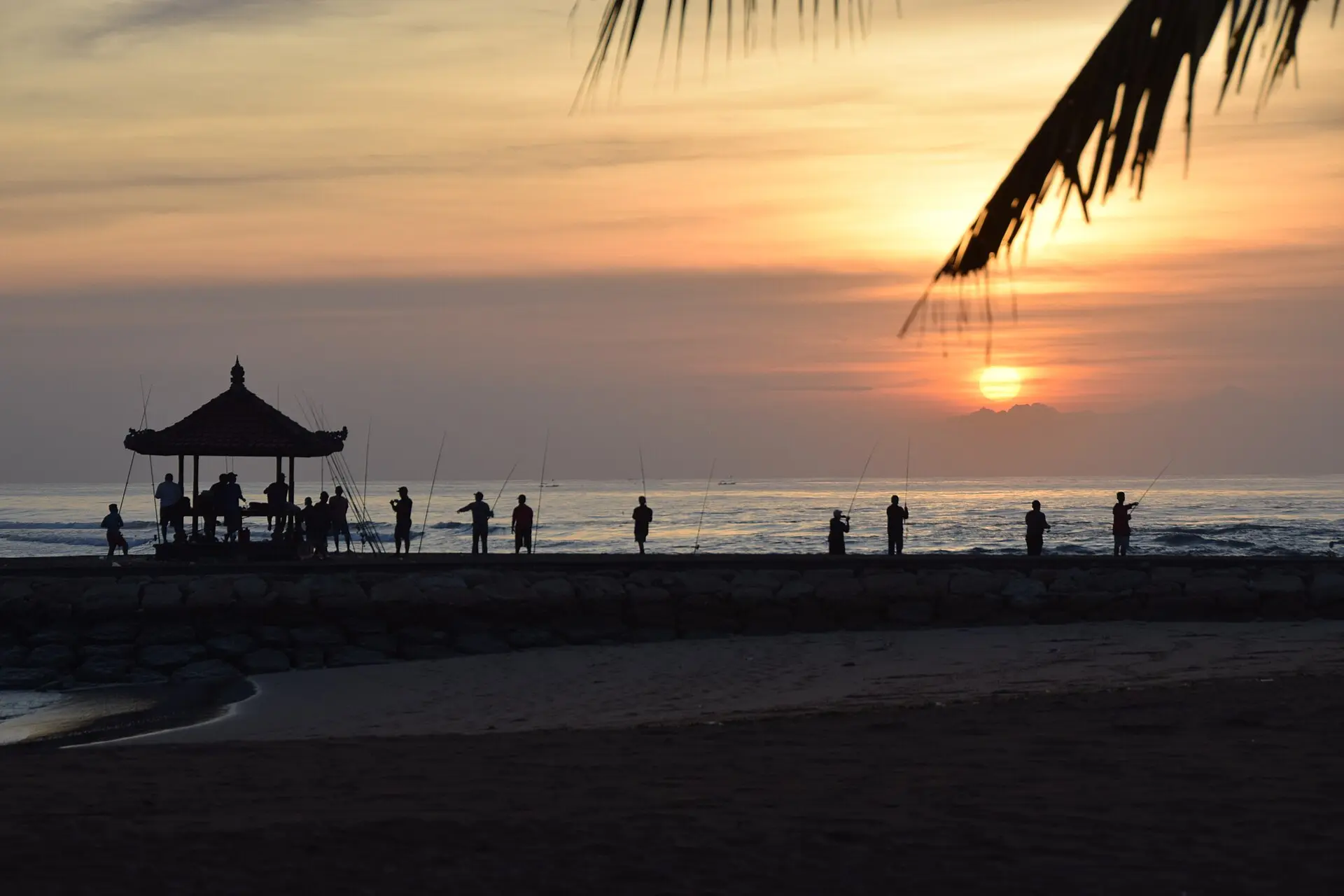
Sunset over the sea at Nusa Dua, with silhouettes of people beside a traditional Balinese pavilion
Evening on the coast at Nusa Dua. Image: “Nusa Dua Bali” by GdML, CC BY-SA 4.0, via Wikimedia Commons. Resized and converted to WebP. Illustrative image, not taken by Asian Travel Tips.

Keep Planning

Sources & Review Dates

We regularly review our guides. These are the official sources used for time-sensitive information, with the date each was last checked.